
Technology, Hospitalists, and the Distance Between Doctors and Patients
A reminder call about tomorrow's appointment. A form sent out ahead of the visit. A doctor who walks into the exam room carrying a laptop. Technology came into the medical system in small ways first, and a lot of people never stopped to notice. I have practiced for thirty-five years, long enough to remember when a visit looked different, and I think the change deserves a plain look.
I come to this subject as a lawyer who likes medicine. I like the science of it, and I am all for innovation. I use technology in my own practice, and later in this chapter I will tell you how. What worries me is something else: the distance that opens up between a patient and the people caring for that patient, and what I think that distance costs in mistakes.
Everything here is my opinion, drawn from my work and from what the people who call me tell me. It is not a study, and I do not offer it as one. I take it in six steps: where technology already sits in medicine, why programming has limits, what the laptop and the hospitalist change, what I think juries are telling the medical profession, where human safeguards still belong, and how I use these tools myself.
However, medicine is still a human-to-human interaction. And the further that we get away from that human interaction, I think it's going to be fraught with more medical mistakes.
Robotic surgery, reminder calls and forms: where technology already sits in medicine
Everybody is talking about AI, and the questions come fast. Are we going to have robots delivering babies? Robots doing surgery? Before I answer, it helps to separate what exists from what people picture.
Robotic surgery exists. We already have it, and "those are controlled by doctors almost like a video game simulator." A doctor sits at the controls. As of this writing, what does not exist is a robot that operates on its own. "Do we have standalone robots that are performing surgery? We don't. Could we? Sure." I can see that coming in the future, and I say so as someone who is a proponent of robotic surgery.
A lot of people miss that AI is already part of their lives, and they do not recognize it. The forms that get sent out and the automated calls that remind us about appointments are how AI is beginning to appear in our medical system.
None of this bothers me by itself. We should have every technological advance we can get. What I watch is how far a patient ends up from a human being once the advances arrive.
Programming has limits, and a self-driving truck shows where
My worry starts with a plain fact about machines. A computer or a robot does what it was programmed to do. I am all for innovation, and I mean that. But "those robots are not infallible. They can make mistakes. It has to do with programming."
The picture I keep in mind is the self-driving truck. It is a machine doing work a person used to do, and "they crash into cars because it's not programmed for every situation." I apply the same limit to medicine, and I call it my opinion. If medicine were put only in the hands of a computer or a robot, I would expect the mistakes to follow, because the machine can meet only the situations it was programmed for.
The further medicine moves from people dealing directly with people, the more I expect those mistakes: "I think it's going to be fraught with more medical mistakes." That is a judgment from thirty-five years of this work, and I hold it as a judgment, not a finding.
Laptops, hospitalists and the doctor you used to know
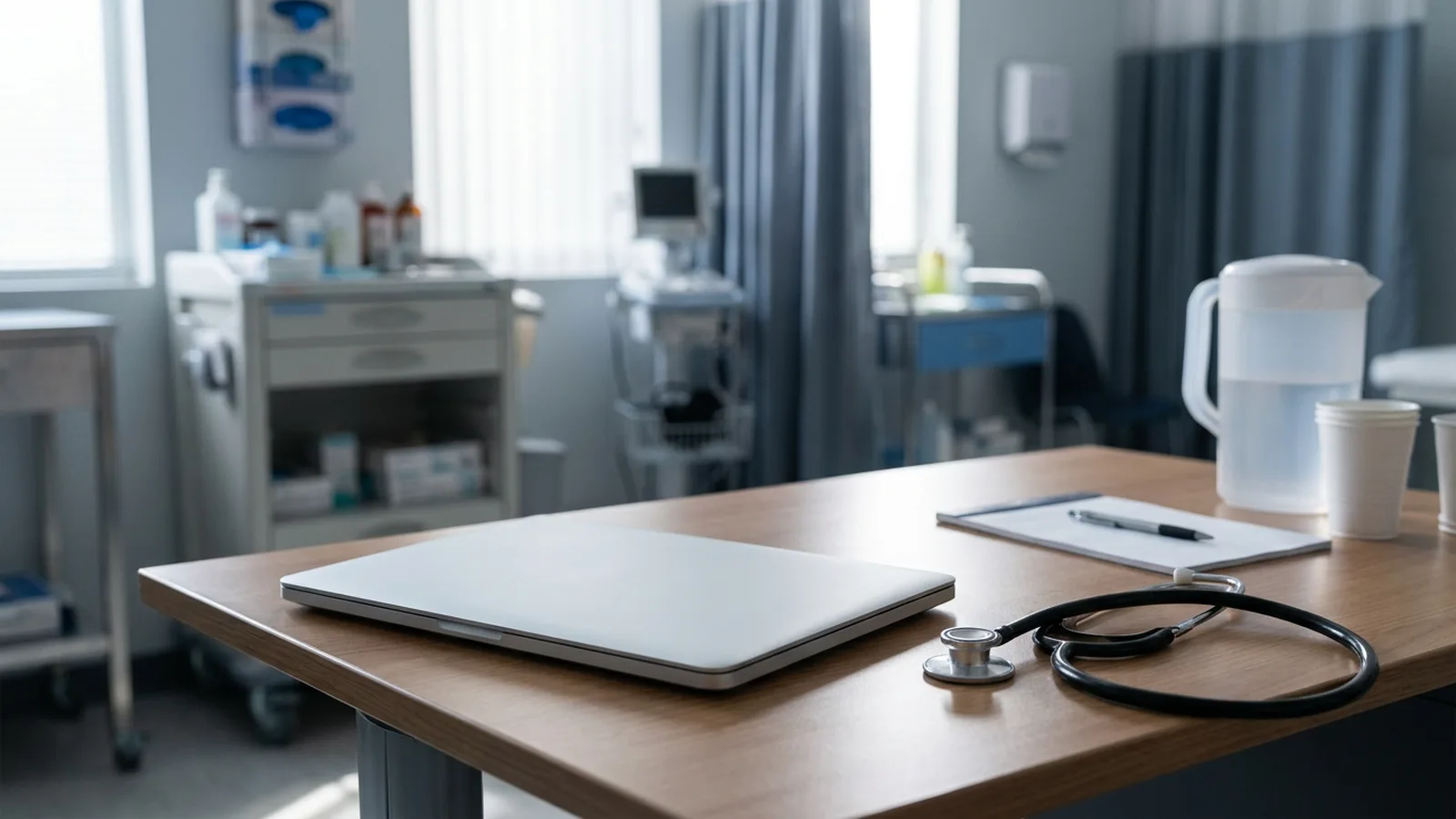
I think everybody is experiencing this, and I am experiencing it too: "We're becoming less and less connected to our doctor." "Our doctor comes in now with a laptop. That wasn't always the way it was."
One piece of this stands out to me. "The most important part that doctors don't want to spend a lot of time on anymore is called the history, which means talking to the patient." Older doctors will tell you that the more they listen, the more the patient tells them about what is wrong. I use the same principle in my own work. A case begins when I let a client tell the story in their own words, from beginning to end, without interrupting. Chapter 7 describes that first conversation.
Now follow the patient into the hospital. "Many times our own doctor doesn't even admit us to the hospital." What we meet instead is "somebody called a hospitalist, a hospital employee who's taking the role of a doctor that we had the relationship with." To my mind the relationship between patient and doctor is going to suffer.
I hear what that distance feels like from the people who call me. Their lives have been turned upside down, and many of them feel ignored by the medical system. A person has a surgery after a good relationship with the doctor, then something bad happens, and the doctor is never seen again. They do not know why. They are mad and confused, and they need to get it off their chest. I am describing what clients tell me, not laying down a rule about every hospital stay.
It reaches past the hospital. The idea of customer service, of being treated with dignity wherever you go, is lost, I believe. You do not get to see anybody anymore. Everything runs through phone calls and call centers, insurance problems never end, and bills arrive for things nobody explained. Things have become so impersonal. Chapter 19 takes up what families are asking for in the end.
What I think enormous verdicts tell the medical profession
Some verdicts against the medical profession are enormous, and people ask me why a jury would do that. My answer is an opinion, and I give it as one.
The less connected people are to their doctor personally, the more distant they become. "The more detached they become, the more angry they become. They can't see a human being." My view is that people who feel detached from the system, and angry at it, hold real power once they sit as jurors. And I do not think they use it carelessly.
Now, I have talked with jurors, and what I have found is this: "Jurors like to do the right thing. My experience in talking to jurors is they take the duty seriously." When a jury sends out one of those "monster verdicts," I read it as a message to the medical profession: "We don't want to be treated like a robot. We want a human to human interaction." That is how I read it.
The medical industry ought to take note, in my view. In my opinion the verdicts are going to keep growing, because people grow more frustrated and angry with a system they cannot see a person in. Chapter 18 looks at who decides a case, from settlement to trial.
Innovation with a human at the controls: prescriptions, pharmacies and false security
None of this makes me an opponent of technology. "I'm a big proponent of innovation. I'm a big proponent of robotic surgery." I am a proponent of anything that can help people, and there is one place where I hope technology helps a great deal.
Medical mistakes, in my experience, are not coming down. I see little change in how often they happen, and what I see is more of them, with "many more prescription errors, many pharmacy errors." Those are mistakes that should not happen, and I hope technology can eliminate them for the good of everybody.
Here is where I see the danger. "I think that when people rely on technology, they have a false sense of security that the computer and that the technology is going to catch all mistakes."
Let's suppose a prescription reaches a pharmacy. Someone has to confirm that the drug is the right drug for that person. Someone has to confirm the dosage, and someone has to look at the interactions between the drugs. "Can all of that be programmed into AI? I guess. I'm not the right person to ask that." Saying what can be programmed is outside my field, and I would not pretend otherwise. What I can tell you is where I stand until the answer is clear: "Until we get to a point where we can say we can rely on this technology, we have to have human beings be at the controls to make sure the safeguards are in place."
The tools I use myself: edited videos and an after-hours AI assistant
I would be a poor critic of technology if I did not tell you how I use it. Those of you who know me see my videos on TikTok, YouTube and Instagram. I am using a lot of AI techniques to make sure those videos are edited properly, and that they are entertaining in a way that keeps you interested in the information.
The information is the point. Most people do not know what their legal options are, and they have no idea how these laws are made. The laws are made in our state capital, Annapolis: the time limits, the amount of money a person can get in a lawsuit, the steps a lawyer must take to bring in a medical doctor. People do not know about those at all. That is why I make videos and a podcast, to give you the information you need to protect your rights. "I have to go to my audience in the way that they want that information presented to them," and the tools help me do that. And "if you call me when it's too late, there's nothing I can do to help you."
As of this writing, I also use an AI-assisted phone system, and I say so plainly. If you call after hours, many reception agencies no longer have live service around the clock, and I want to be sure you are talking to someone. "Yes, it is an AI virtual assistant." The one I use has been very well trained and very well programmed, so "it's almost like talking to a real person, but it's not." It lets me respond in a world that runs twenty-four hours a day, seven days a week.
The assistant is for the hours when a live person is not answering. It is not who I am. "I'm a real life person. I'm not an AI robot." Clients tell me they never expected to reach a lawyer at all. Some ask whether I am a lawyer at all or one of the AI voice assistants, and I tell them I am a real lawyer. A new client who calls me speaks to me, and I want them to know they are important. I use these tools, I tell you which ones, and I want you to know that the lawyer you reach is a real one.
Common Questions
- Is AI going to replace doctors and surgeons?
- Not as things stand. Robotic surgery exists, but doctors control it, and, as of this writing, a robot that operates entirely on its own does not exist. I can see one arriving in the future. AI already shows up in appointment reminder calls and in the forms patients are sent. My concern is not the technology itself. It is how far patients end up from a human being as it spreads.
- What is a hospitalist, and how is that different from your own doctor?
- As I describe it, a hospitalist is a hospital employee who takes the role of the doctor a patient already knows. Many times a patient's own doctor does not admit that patient to the hospital at all. That is how I see it from the patient's side, and I think it strains the relationship between patient and doctor. It is my opinion about the relationship, not a claim about any one hospital.
- Why do juries return such large verdicts in medical malpractice cases?
- I can only give you my opinion. People who feel detached from the medical system grow angry with it, and some of them later hold the power of a juror. "They're not doing it irresponsibly." I read an enormous verdict as jurors sending a message to the medical profession about being treated like a robot. Chapter 18 covers who decides a case, from settlement to trial.
- Do medical malpractice lawyers use AI?
- I do, in two ways, and I say so. AI techniques help me edit the videos I put on YouTube, TikTok and Instagram so they hold a viewer's interest. As of this writing, after hours an AI virtual assistant answers my phone, because many reception services no longer offer live answering around the clock. A new client who calls me speaks to a real lawyer, and I say that on purpose.
- Can technology reduce medical mistakes?
- I hope so. "What I hope is that the technology will be able to reduce medical mistakes." My condition is that people stay in place as safeguards, at a pharmacy for example, where someone checks the drug, the dosage and the interactions. "We have to balance innovation with still the human safeguards." Until technology can be relied on, I want a human being at the controls.
Chapter Reflection
This chapter holds two beliefs, and I think they belong together. Technology can help, and I want the help. Fewer prescription and pharmacy mistakes would be good for everybody. But a patient who meets a laptop in the exam room and a hospitalist where the family doctor used to be feels the distance, and my opinion, after thirty-five years, is that the distance costs the medical profession something. Medicine will keep changing, and I will keep using the tools that help me reach people. I will also keep saying that a family deserves to deal with a person who listens. The conclusion that follows draws the whole book together.